
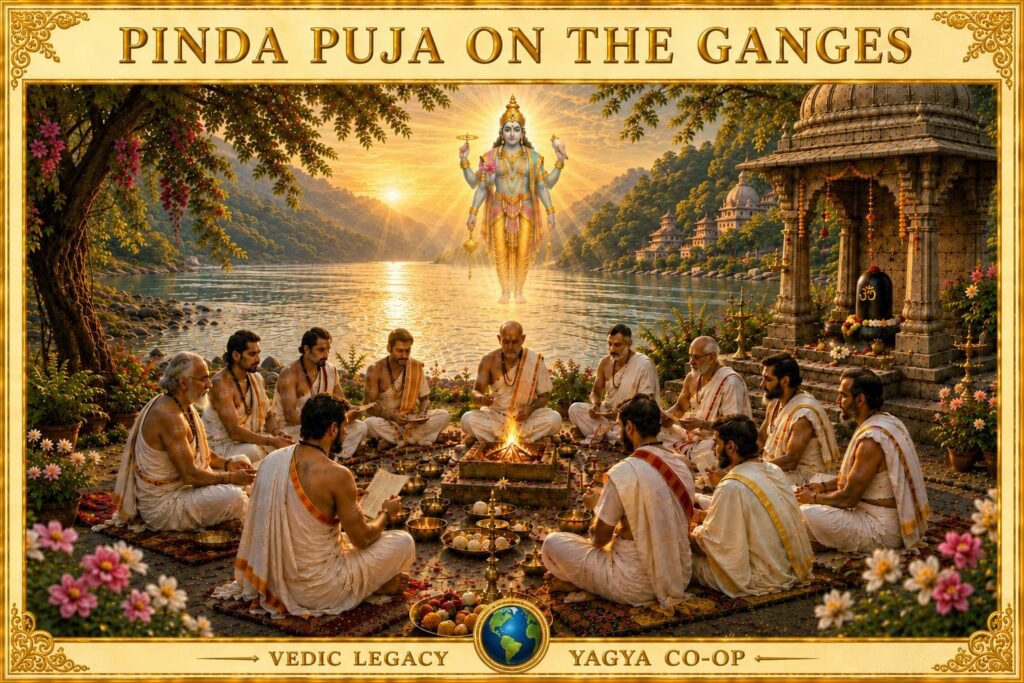
Vedic Last Rites Yagyas
Yagyas To Support Transition:
Traditional Vedic Last Rites
Traditional Vedic transition rites are a new service offered by the yagya co-op for you or your loved ones and acknowledge the continuum of life and provide traditional Vedic tools to care for, heal and nourish the soul in their ongoing journey.
These yagyas start at $56 for the Gita Parayana yagya, and you can configure the actual yagya you want and the numbers of pandits based on whether you want it performed at the ashram or by the River Ganges. You can begin the order form and see what would work best for you without any obligation to place an order.
“I remember being impressed by the ceremony and deeply comforted by it. The Gita Parayana yagya and Pinda Puja provided much needed support at such a critical and holy time, and to be able to arrange that for him was deeply gratifying.”
Anon.
You can pre-schedule final transition yagyas, either immediately, or for in the future.
Body and Soul
Nowadays, funeral services are intended to provide a lovely level of dignified care for the body and often emphasize memories of the loved one. Caring for the body is largely taken care of.
We can see from the growth in interest of natural burial services that people are interested in dignified, alternative ways of caring for the body upon passing than traditional burial or cremation services offer.
However, these services largely provide only different ways of caring for the physical realm by honoring a person’s body once they have departed this life.
Life: The Vedic Perspective
The ancient Vedic seers state that the soul is on a continuing path, and formulated specific, traditional Vedic enrichments that actively support, nourish and protect a soul during its transition into its afterlife form on its continuing evolutionary journey.
Caring for the soul is what these traditional Vedic rites offer. The Vedic approach to last rites offers an opportunity to focus on the continuum of life with traditional and timely healing inputs through the Vedic technology of yagya.
In the Vedic view, a soul does not cease to exist but takes a new form, beyond a physical body, and is still very much alive conscious and in an ongoing relationship with us as Pitrus: or departed ancestors. The Vedic view prioritizes sending a loved one into the next phase of life with healing and support, because the soul and the living share an unbreakable connection and are still exchanging influences whether or not they are in a physical body.
Nowadays, caring for the body is largely being taken care of. Caring for the soul is what these traditional Vedic rites offer.
Available Yagyas
We offer two traditional yagyas for the final stage of life. This is a brief overview:
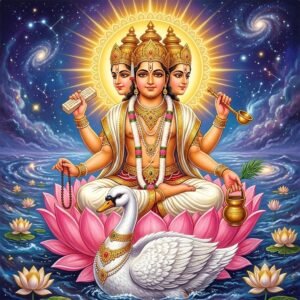
- The Gita Parayana Yagya, is performed during the period of active transition, to remove fear and to enliven and establish the soul in the timeless truths of the Bhagavad Gita.
- Pinda Puja Yagya, traditionally performed for 3 days on the banks of the River Ganges to quickly elevate the soul, remove fears, confer protection from the laws of nature (the Vedic devata) and provide support for evolutionary direction in the soul’s progress. The pandits emphasize that this yagya has the ability to confer Moksha – or liberation to the soul.
“I was pretty numb at the time, but the one thing I do remember is that there was a sense that he felt grateful for the Pinda Puja. I think the reason that I did not grieve so much was because of the bliss that he was feeling. Even when I poured his ashes into the river there was a great sense of joy from him, and so that joy remains with me.”
Anon.
Arranging the Yagyas
This service can be arranged in advance, so that nothing has to be organized in a moment of grief. Many people make this provision quietly, well ahead of the time, the way one prepares to settle any matter of importance while there is calm to do it in.
This is a precious time for each family and these yagyas embrace the soul of a loved one in a protective, nourishing cocoon of devatas who guide, protect and nourish. It is said that these yagyas help to remove fear and support a peaceful transition.
The person, yajamana, names one reliable contact, with a dependable email and phone number. When the time comes, that person sends a single message, and the pandits begin. There is nothing further for the family to manage. The intention of this service is to lift the practical weight at exactly the moment it is heaviest and initiate the performance of the yagyas and their nourishing, uplifting effects..
Further Vedic rites can be arranged for the soul beyond these two, including Pitru Paksha in the autumn and special pujas performed at the sacred sites along the Ganges. These can be added at any time.

“When I did Pinda Puja for my mother, there were some remarkable welcomed shifts and healings (that never happened in life) in what had been an incomplete & strained life relationship between us.”
Anon.
Life: The Vedic View
The body belongs to one lifetime and is normally finite. By contrast, the soul is not finite, and is permanent and rooted into that which is Sat-Chit-Anada: existence, consciousness, and bliss, representing the unchanging essence of ultimate reality (Brahman) and the true self (Atman) in the Vedic understanding.
In the Vedic understanding, life moves in a circle, and what we call the end of a life is the end of this body, not the end of the one who lived in it. The Bhagavad Gita states this plainly, in Krishna’s counsel to Arjuna:
न जायते म्रियते वा कदाचिन्नायं भूत्वा भविता वा न भूयः ।
अजो नित्यः शाश्वतोऽयं पुराणो न हन्यते हन्यमाने शरीरे ॥ २० ॥
na jayate mriyate va kadacin
nayam bhutva bhavita va na bhuyah
ajo nityah sasvato ‘yam purano
na hanyate hanyamane sarire
“It is never born and never dies. Having once been, it never ceases to be. Unborn, eternal, and ancient, it is not slain when the body is slain.”
Bhagavad Gita 2.20
Easing The Soul’s Journey
These yagyas are performed for that soul, continuing in its evolution. They protect, nourish, uplift and guide a person as they leave the body, and they support the soul as it continues into its next stage of evolution, whether a further incarnation or the end of incarnations and continuance into the universe itself.
They are performed for the end of one journey and the start of another and to smooth, guide, enrich both, while easing the fear of transition and change. They are a way to provide for one’s own soul, or for the soul of someone loved, at one of the points on its journey where such provision has always mattered most.
Two yagyas stand at the center of this service. One is performed during the transition, while a person is still leaving the body. The other is performed afterward, either in the ashram or, optionally, on the banks of the Ganges. Both are conducted by our classically trained Vedic pandits.
“I thought maybe I could help her with the puja, and after 3 days I felt a little less pain and thought of her to be in a better place. During yagya, I was doing meditation which helped me feel better.”
Anon.
The Transition Yagya: Gita Parayana
Gita Parayana is a complete recitation of the Bhagavad Gita, performed while a person is in the process of leaving the body. Medical staff can usually tell a family when this period has begun, as the body’s systems begin to slow. It may last a few hours or, in some cases, a few days.
The Gita is Krishna’s counsel to Arjuna, and its central subject is the soul that does not die. Among its verses is the one the yagya pivots on—the soul passing from one body to the next, just as a person changes worn clothing:
वासांसि जीर्णानि यथा विहाय नवानि गृह्णाति नरोऽपराणि ।
तथा शरीराणि विहाय जीर्णान्यन्यानि संयाति नवानि देही ॥ २२ ॥
vasamsi jirnani yatha vihaya
navani grihnati naro ‘parani
tatha sarirani vihaya jirnany
anyani samyati navani dehi
“As a person sheds worn-out clothes and puts on new ones, the soul sheds worn-out bodies and enters new ones.”
Bhagavad Gita 2.22
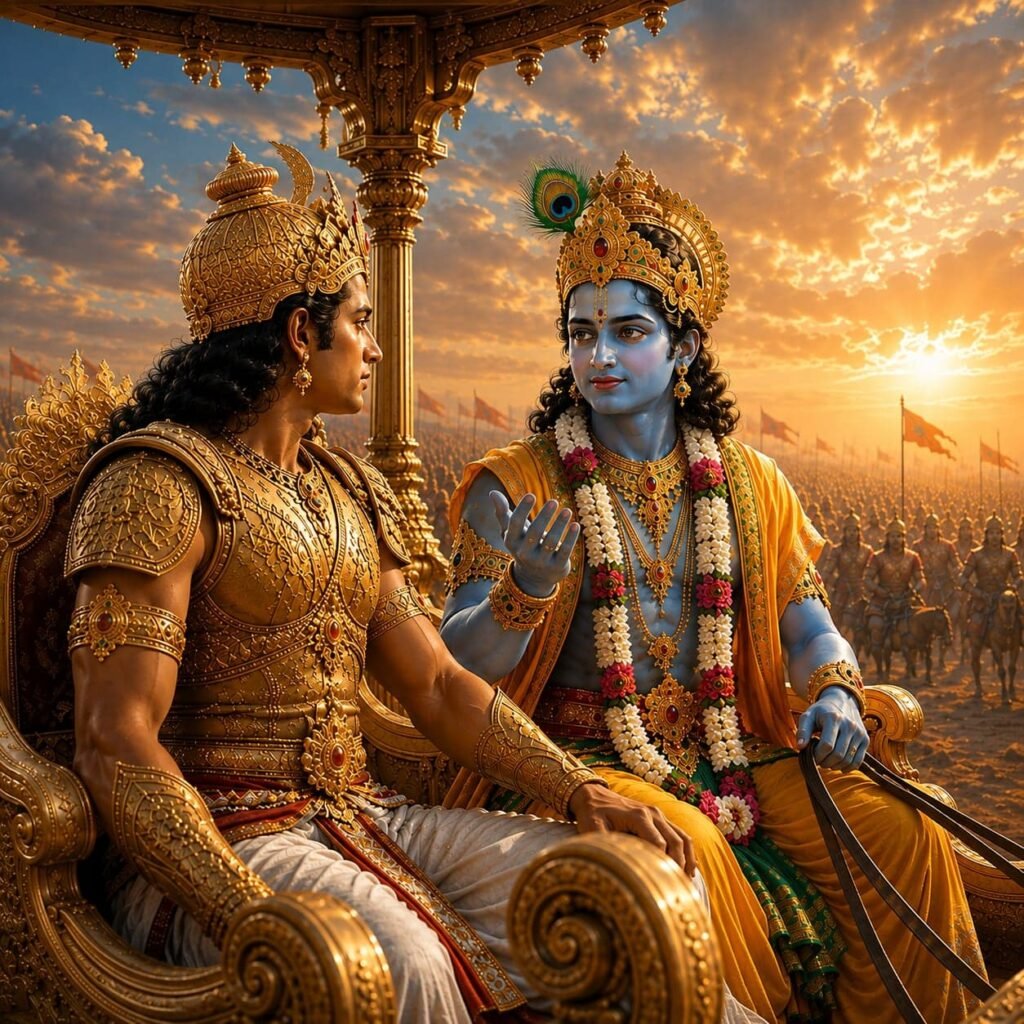
Recited at this time, it is traditionally offered to steady the one who is leaving and to turn the attention toward the Self rather than toward fear. Transition can bring a lack of unease to a person as they journey on. This yagya is performed to quiet this period, so that the soul makes its passage settled rather than afraid.
Because the timing cannot be known in advance, Gita Parayana is arranged beforehand and begins promptly once the family gives word. It is performed by three pandits and continues for three days, at the start of the transition period.
“It has been a very thorough reset of the relational structure of the family tree to something constructive instead of destructive, nourishing instead of life-sucking. That whole cage match energy (with regard to ancestors) evaporated into a team of supporters standing behind me, and it also spilled into some of the living siblings after years of estrangement. I now have the relationship with my deceased mom and relatives that I only dreamed of in life.”
Anon.
The Final Rites Yagya: Pinda Puja
Pinda Puja is performed after the soul has left the body, within the traditional window of about 13 days. This is a period, sages say, when the soul is very malleable and supple, because it is free of the limitations of the body’s physicality, and as such is able to respond very quickly to an infusion of spiritual depth. In brief, the pandits explain that the soul can be very quickly elevated to God Consciousness or Unity Consciousness states with the performance of the proper yagyas.
This yagya belongs to the ancient tradition of shraddha, and it is performed either at the ashram or, optionally, on the banks of the Ganges. Pinda – which are traditional rice ball offerings – are prepared and offered in the soul’s name, nourishing them, tradition says.
The timing of this yagya is important because, as mentioned, in the days after it leaves this body, the soul is in a receptive, malleable state, when its evolution can be supported and its progress accelerated. This is the purpose of the yagya. When performed on the banks of the Ganges River, Pinda Puja is said to guarantee moksha: liberation from the cycle of birth and death.
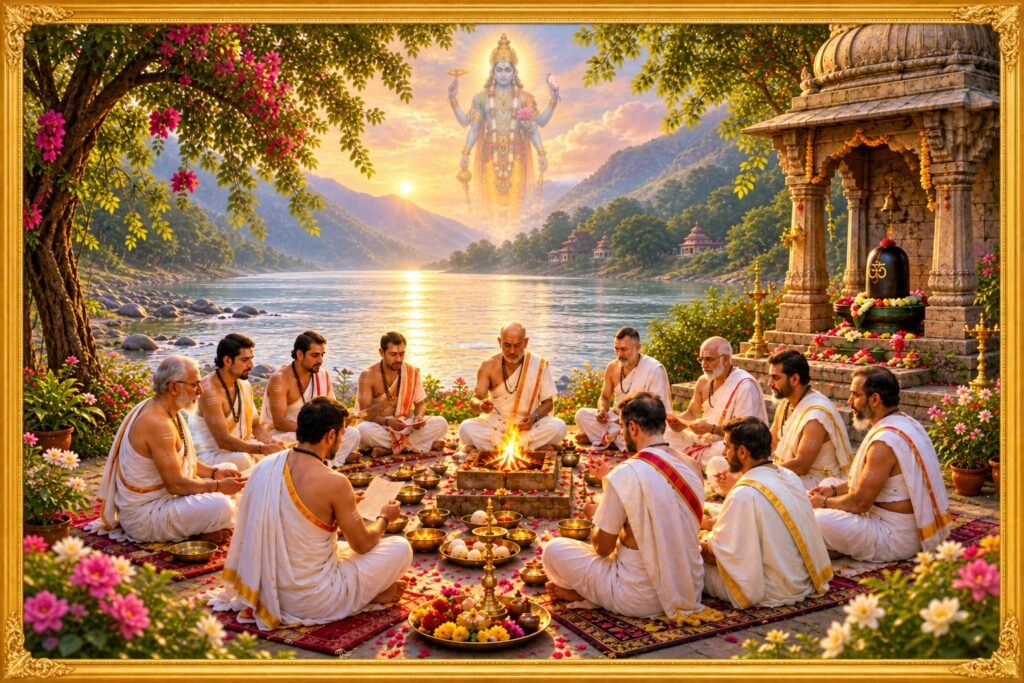
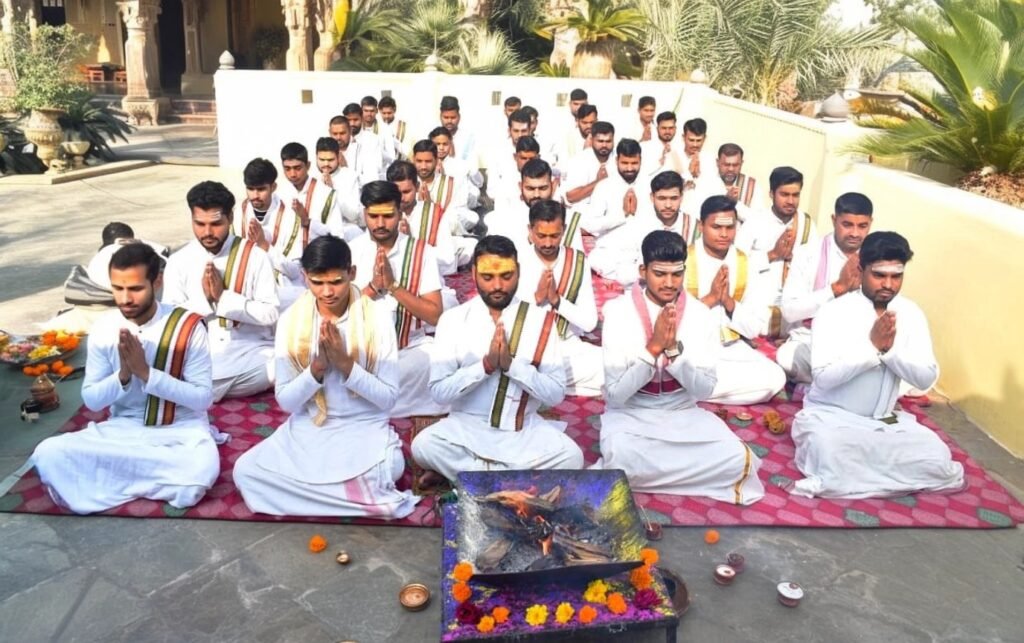
Pinda Puja is normally performed by 11 pandits over three days. It can be arranged with more pandits, or over more days, according to the wish. The family can witness the yagya by livestream and a record of its performance, traditionally taken at the riverbank of the Ganges River. Alternatively, this yagya can be performed at our ashram.
Picture of the Person During the Rites Yagya’s Performance
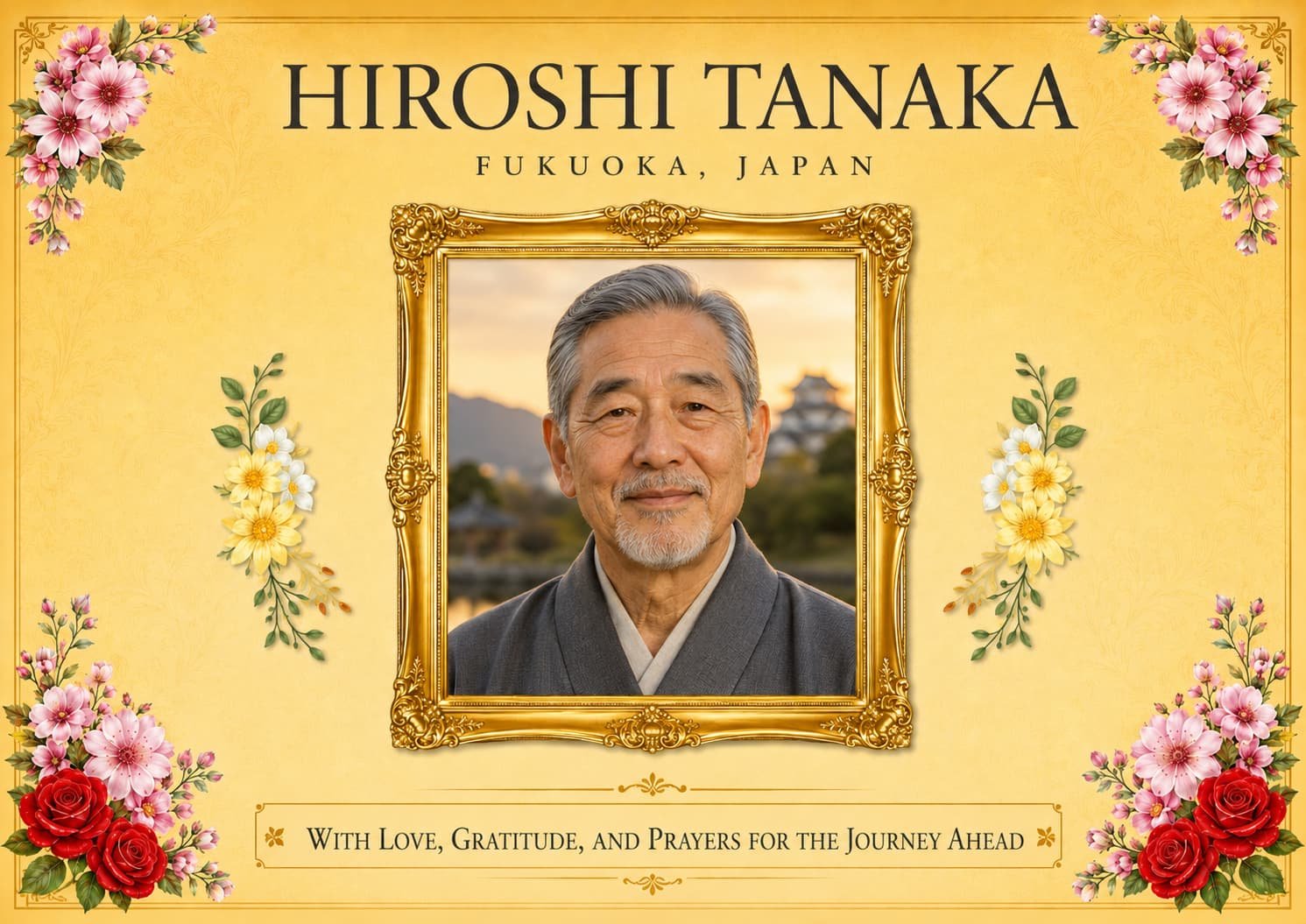
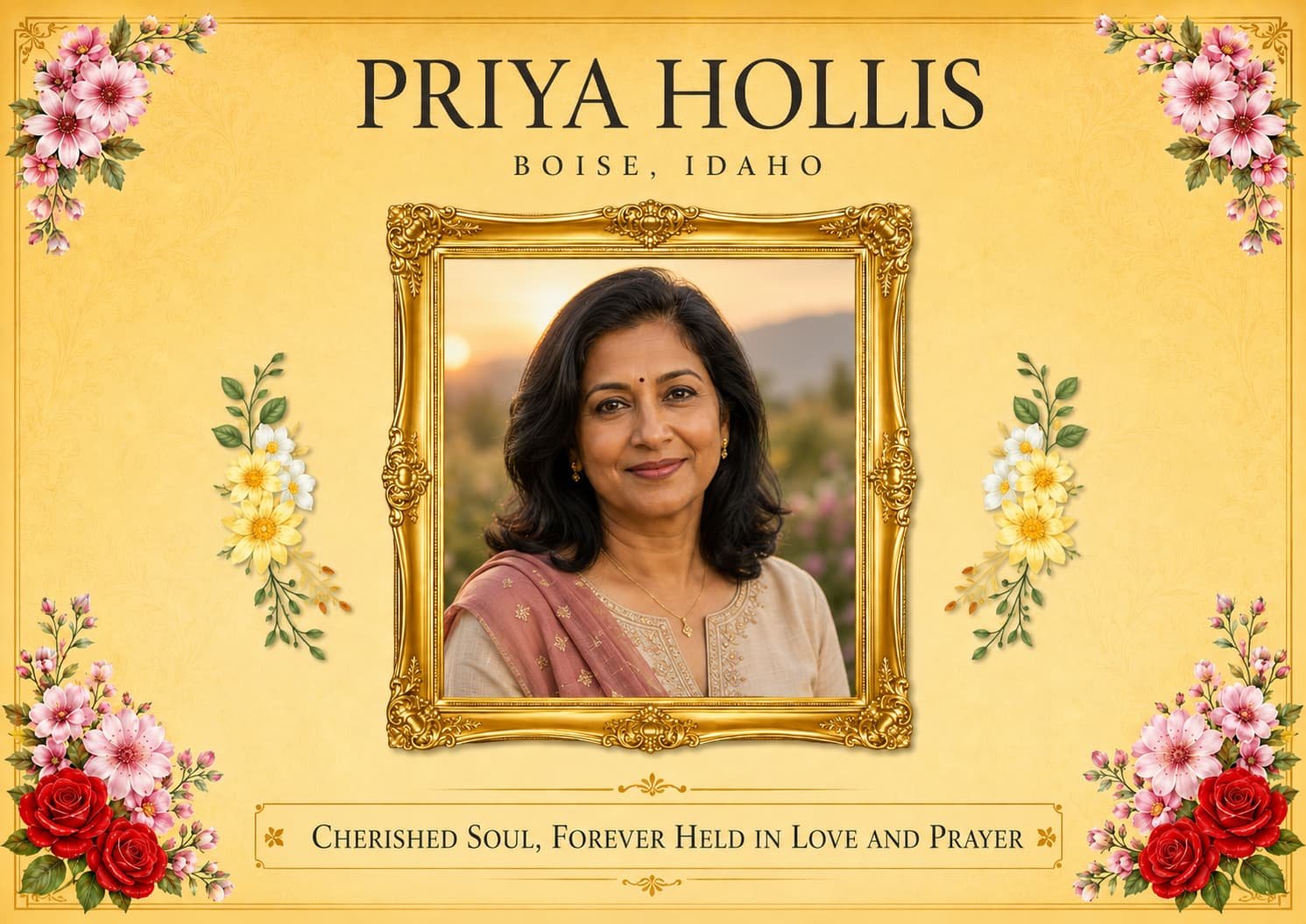
The pandits like to have a picture of the person during Pinda Puja, which is used in the yagya, if you wish. You can include an image when we send your emailed confirmation. Examples of the standard image format is attached below; these can be customized, adding texture and themed background. We recognize that this is an emotional moment for anyone and to see your loved one elevated and dignified in a Vedic context is quite special and healing.





“I really feel the presence of the person the Pinda Puja is being done for. They are so joyful, so happy, and so grateful that this is being done for them.”
Anon.
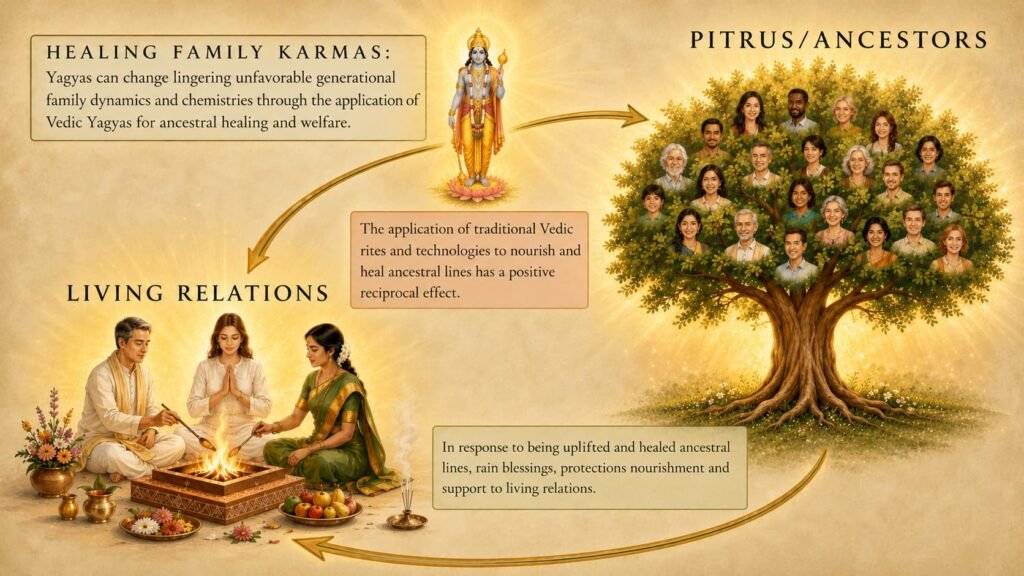
The tradition also holds that these rites bring healing within the family line for both ancestors and the living relations. Burdens carried down a family, known as pitru dosha, are traditionally addressed through Pinda Puja, and many who commission it describe a lasting change in their relationship to those who have gone before them (an easing of kala sarpa dosha; which is a nasty planetary dosha.)
A Smooth Ending, Transition, and New Beginning
The end of a life is a passage, not a full stop. These yagyas honor the person who lived, and they accompany the soul into what comes next.
These traditional Vedic yagyas and rites traditionally ensure that transition and onward journey are smooth.
“After the yagya, the results were as if someone had pulled pebbles out of my shoe. Memories of past difficulties with a particular relationship faded almost immediately, replaced by an unexpected mirth and affection. Since then, I’ve done this yagya for others where there had been difficulty, as well as beloved relatives, associates and friends. Each time gives the same result: peace, emotional healing and calm for them and me.”
Anon.
Reserve the Vedic Last Rites Yagyas performed by classically-trained, traditional Vedic pandits. Simply complete the form here, and rest assured knowing that these arrangements are set in place.
Book Vedic last rites yagyas here for now or for in the future.